
Character Design
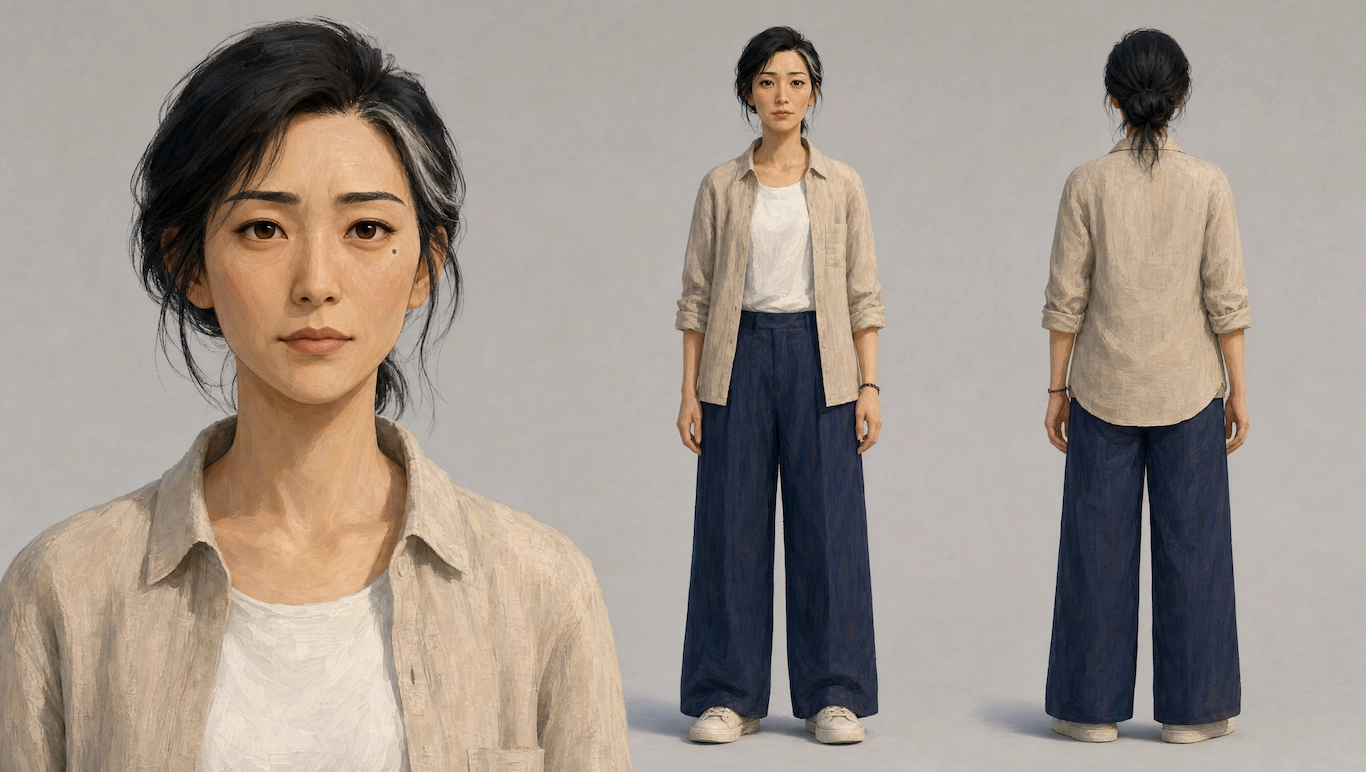
Characters are often the first thing viewers connect with. Before they understand the full story, they notice a face, a posture, an expression, and a presence.
We translate the descriptions in your manuscript into clear visual identities that feel believable, consistent, and true to the world of the book. The goal is not simply to create attractive images. It is to design characters that communicate personality, role, emotion, and genre before they speak a single word.
Translating Words Into Visual Identity
A manuscript may describe a character through appearance, behaviour, history, and relationships. Our job is to bring those details together into one coherent visual direction.
We study the character’s age, background, personality, physical traits, clothing, emotional state, and role within the story. We also consider how the audience should perceive them at first glance.
Every choice should support the narrative. A guarded character may need a restrained expression and closed body language. A confident protagonist may require a stronger silhouette, direct gaze, and more deliberate styling.
Designing for the Story, Not for Decoration
Good character design is not about adding visual detail for its own sake. It is about making the character feel specific to the book.
We avoid generic faces, costumes, and styling that could belong to any story. Instead, we build visual choices around the book’s setting, period, genre, tone, and emotional atmosphere.
This ensures that a historical character feels grounded in the correct era, a fantasy character belongs to the world around them, and a contemporary character reflects the social and cultural context of the story.
Creating Consistency Across Every Scene
A trailer may show the same character from different angles, distances, locations, and emotional moments. Without a strong design system, they can quickly become inconsistent.
We define key visual references before production begins, including facial features, hairstyle, wardrobe, proportions, colour palette, and distinctive details. These references guide every later image and shot.
The result is a character who remains recognisable throughout the trailer, whether shown in a close-up, a wide shot, or a fast-moving sequence.
Expressing Emotion and Personality
Appearance is only one part of character design. Performance matters just as much.
We plan how the character should carry themselves, how they react, and what emotional state each scene requires. Subtle changes in expression, posture, gesture, and eye direction can communicate fear, confidence, grief, attraction, or suspicion without relying on exposition.
This gives the final film more emotional depth and helps the audience connect with the story more quickly.
Balancing Accuracy With Cinematic Impact
Authors often have a strong image of their characters, while trailers also need visual clarity and immediate impact.
We balance both needs. Important details from the manuscript are preserved, but they are refined for the screen so the character reads clearly within a short format.
Where necessary, we simplify complex wardrobe, strengthen silhouettes, or adjust visual elements to improve consistency and recognisability. The aim is not to change the character, but to make the character work more effectively in motion.
Preparing the Character for Production
Once the design direction is approved, it becomes the reference for storyboarding, world building, scene creation, animation, and editing.
This reduces visual inconsistencies, prevents unnecessary revisions, and gives the production team a clear standard to follow.
A well-designed character does more than look convincing. It gives the story a human centre, strengthens emotional connection, and helps viewers remember the book long after the trailer ends.