
Film Production
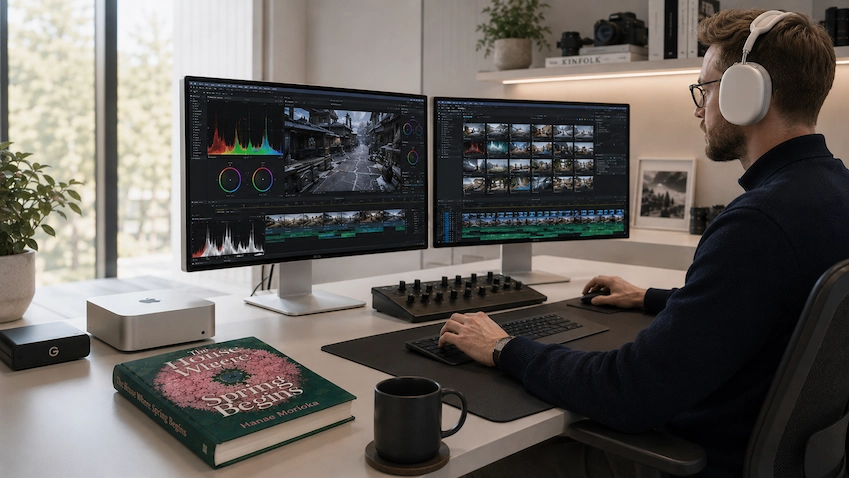
With the story, characters, locations, and storyboard approved, we begin producing the film.
This is where the creative plan becomes a finished visual experience. We build each scene, direct the movement and performance, refine the lighting and composition, and bring every element together through editing, sound, music, typography, and voiceover.
The goal is not simply to make the trailer look cinematic. Every production choice must strengthen the story, hold attention, and make the book feel worth discovering.
Building Each Scene
We produce the trailer shot by shot using the approved storyboard as our guide.
Characters are placed within the established environments, and each scene is developed around its narrative purpose. We refine composition, camera perspective, lighting, atmosphere, and visual detail to ensure the images feel connected and intentional.
This structured approach keeps the production focused and prevents the final film from becoming a collection of unrelated visuals.
Creating Movement and Performance
Movement gives the story energy and emotional credibility.
We direct character expressions, gestures, body language, environmental motion, and camera movement according to the needs of each scene. A subtle look may communicate suspicion. A slow camera movement may build tension. Faster cuts and stronger motion may increase urgency.
The purpose of movement is not to make every shot busy. It is to guide the viewer’s attention and make each moment feel alive.
Establishing a Cinematic Look
Lighting, framing, depth, colour, and texture determine how the audience experiences the world of the book.
We refine these elements across every shot so that the trailer maintains one consistent visual identity. The look is shaped by the story’s genre and emotional tone, whether it requires warmth, mystery, romance, danger, scale, or realism.
Consistency is critical. Even strong individual shots will weaken the trailer if they appear to belong to different films.
Editing the Narrative
Once the scenes are produced, we assemble them into the full trailer.
Editing controls what the audience sees, when they see it, and how long each moment lasts. We refine the pacing, transitions, reveals, and emotional progression so the film remains clear and engaging from beginning to end.
Shots that do not add tension, information, or emotion are shortened or removed. The final edit must earn every second of the viewer’s attention.
Sound, Music, and Voiceover
Sound is responsible for much of the trailer’s emotional impact.
We combine music, sound design, atmosphere, voiceover, dialogue, and moments of silence to support the visual story. Each element is timed carefully so that it strengthens the pacing rather than competing with the images.
A strong soundtrack can make a scene feel larger, more intimate, more threatening, or more emotional. It turns the trailer from a sequence of images into a complete cinematic experience.
Titles and On-Screen Text
On-screen text helps communicate essential information quickly.
We design and animate titles, key phrases, book details, author names, release information, and the final call to action. Typography is matched to the visual identity of the book and integrated into the edit rather than added as an afterthought.
The text remains concise and readable so it supports the story without interrupting the viewing experience.
Refinement and Quality Control
Before the film moves to final delivery, we review every detail.
We check character and location consistency, pacing, transitions, audio balance, spelling, typography, visual quality, and platform readability. We also refine any moments that feel unclear, repetitive, or disconnected from the approved creative direction.
This stage protects the quality of the final result and ensures the trailer feels polished, cohesive, and ready to represent the book professionally.
From Production to Final Film
Cinematic production brings every previous stage together into one finished experience.
Because the story, visual identity, and structure have already been carefully planned, production becomes more efficient and revisions remain focused. The result is a trailer that does more than display the book. It communicates its atmosphere, creates emotional interest, and gives potential readers a compelling reason to learn more.